Listen to this article
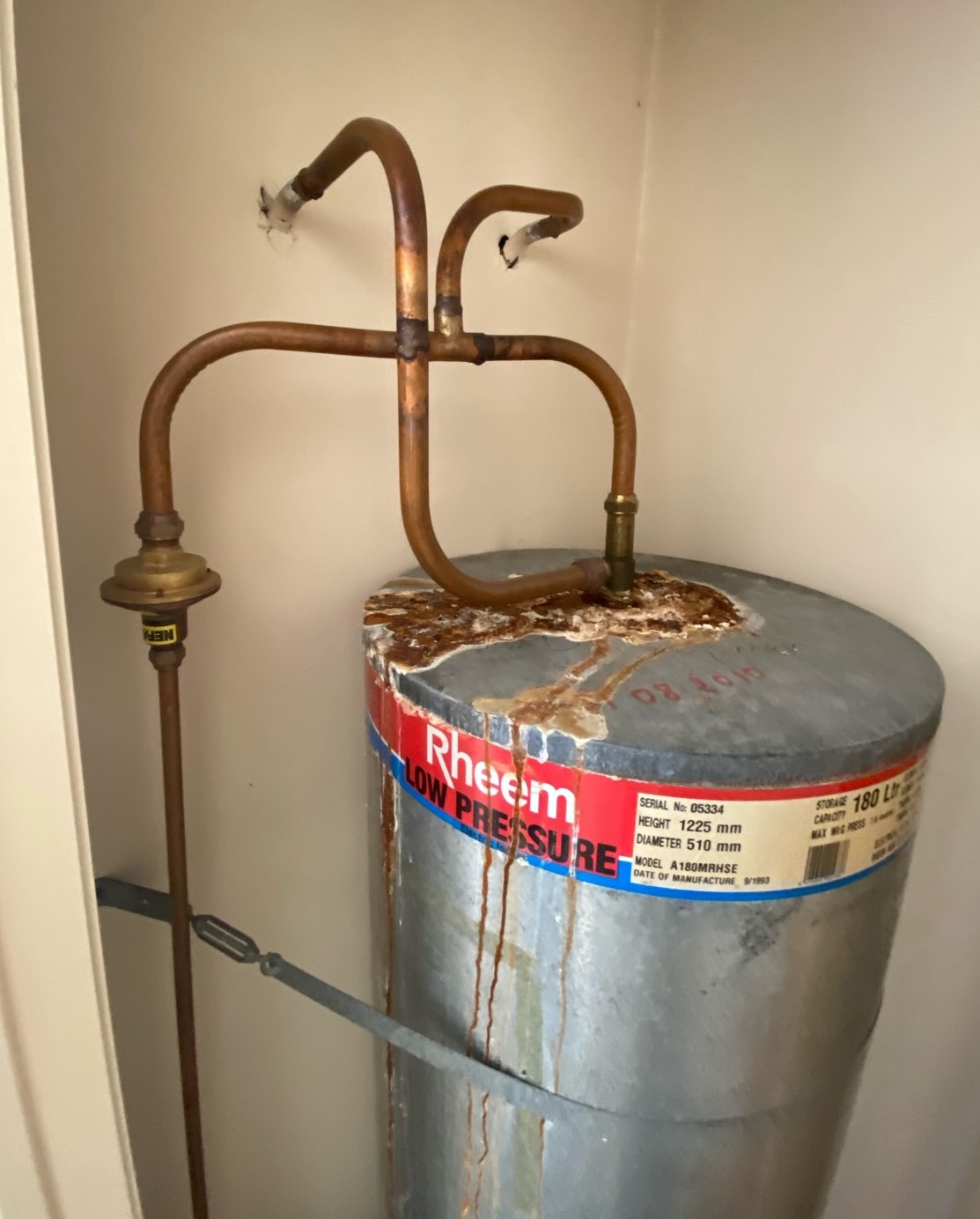
Your hot water cylinder works away quietly in its cupboard — until it doesn't. Most Auckland homes have a storage cylinder, and they don't last forever. Here are five warning signs it might be time for a replacement, from Pete at Water & Gas Worx — PGDB-registered with 17+ years on Auckland tools.
Quick answer: Replace your hot water cylinder if you notice rusty or discoloured water, puddles or dampness around the base, shorter showers than usual, rising power bills, or it is over 15 years old. Most NZ cylinders last 15 to 20 years. A like-for-like electric replacement costs $2,499–$3,500 installed, gas continuous flow $3,599–$5,500, and heat pump systems $6,399–$8,299. Water & Gas Worx provides 24/7 emergency callouts at $295+GST after-hours if your cylinder fails on a Sunday night.
Running Out of Hot Water Faster Than Usual
If you're getting shorter and shorter showers before the water goes cold — and your household hasn't grown — the cylinder may be losing its ability to heat and hold water efficiently. Sediment builds up at the bottom of the tank over time, reducing the effective capacity. Have it inspected before it gets worse.
Rusty or Discoloured Water
Brown or rusty water coming from your hot taps is a sign of internal corrosion. Every cylinder has an anode rod designed to attract corrosion and protect the tank walls — but once that rod deteriorates, the tank itself starts to rust from the inside. If you're seeing discoloured water, get it checked — it may be salvageable, or it may be time to replace.
Leaking Around the Base
Puddles or dampness around the bottom of your cylinder usually means the tank has corroded through. This is the most obvious sign it's done. Don't wait — water damage to your floors, walls, and framing costs far more than a new cylinder. If you spot a water leak, call a plumber immediately.
Your Cylinder Is Over 15 Years Old
Most hot water cylinders in New Zealand last between 15 and 20 years. If yours is approaching that age or you don't know when it was installed, check the manufacturer's plate on the cylinder for a date. Planning ahead means you can choose the best replacement on your terms — not in a panic when it fails on a Sunday night and you need an emergency plumber.
Rising Power Bills
An aging cylinder loses efficiency as insulation degrades, elements wear out, and sediment builds up. If your power bill has been creeping up and nothing else has changed, your hot water system could be the culprit. Modern cylinders are better insulated and more efficient, and a continuous flow system eliminates standby losses altogether. The Energy Efficiency and Conservation Authority (EECA) has useful guides on choosing energy-efficient hot water options.
Replacement Options
Frequently Asked Questions
How do I know if my hot water cylinder needs replacing?
Look out for rusty or discoloured water, puddles around the base, running out of hot water faster than usual, rising power bills, or a cylinder over 15 years old. If you notice any of these, it is worth getting it checked by a plumber before it fails completely.
How long does a hot water cylinder last in New Zealand?
Most hot water cylinders in NZ last between 15 and 20 years, depending on the brand, water quality in your area, and how well it has been maintained. Checking the date plate on your cylinder will tell you how old it is.
Can a leaking hot water cylinder be repaired?
It depends on where the leak is. A leaking valve or fitting can often be repaired, but if the tank itself has corroded through, it needs replacing. A plumber can assess the leak and let you know your options.
How much does it cost to replace a hot water cylinder in Auckland?
A like-for-like electric cylinder replacement typically costs between $2,499 and $3,500 installed. Continuous flow systems run $3,599 to $5,500, and heat pump systems $6,399 to $8,299. Water & Gas Worx labour is $155+GST first hour and $100+GST per hour after, with all pricing fixed and quoted upfront before work starts.