Listen to this article
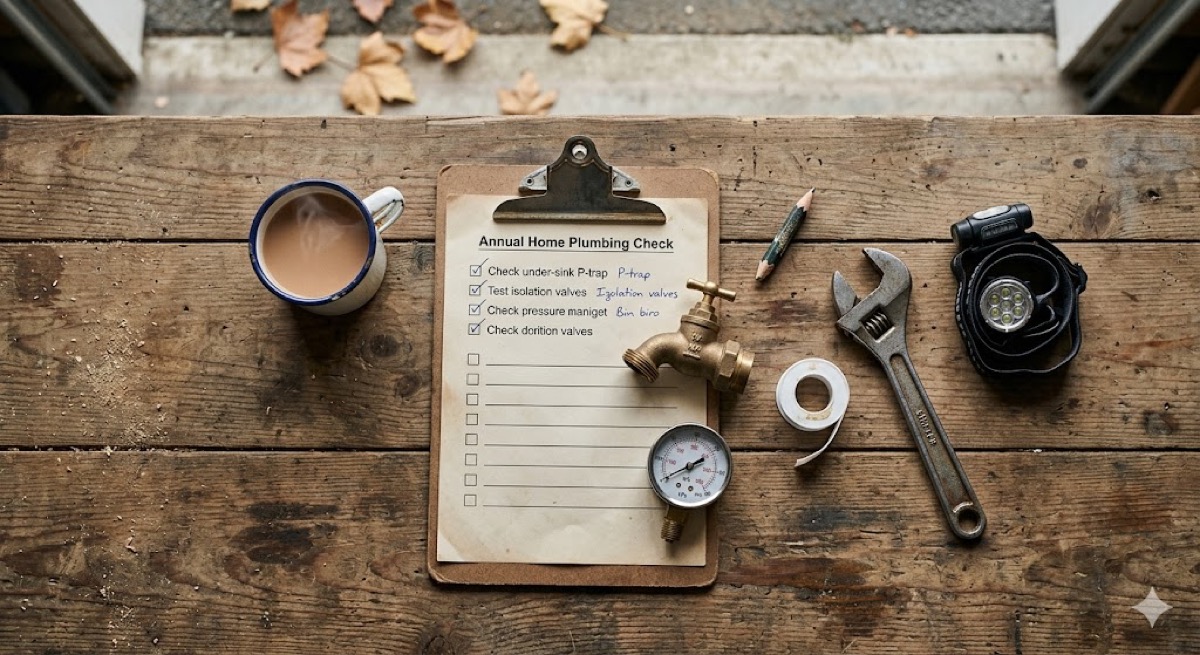
Most plumbing emergencies do not come out of nowhere. They start as small issues — a slow drip, a bit of rust, an ageing hose — that go unnoticed until something fails. An annual plumbing check takes an hour or two and can save you thousands.
Here is a practical checklist for Auckland homeowners. Work through it once a year, ideally in autumn before winter places more demand on your hot water and heating systems.
Hot Water System
- Check for rust or leaks: Look around the base and connections of your hot water cylinder. Any rust staining or moisture is a warning sign.
- Note the age: Cylinders typically last 15 to 20 years. If yours is approaching this age, start budgeting for replacement — do not wait for it to fail.
- Check the pressure relief valve (PRV): There should be a small drip pipe coming from the cylinder that occasionally releases water. If it is constantly dripping or never releases anything, have it checked.
- Test the temperature: Your hot water should reach 60°C to prevent legionella growth, but be delivered at the tap at no more than 55°C (the tempering valve controls this). If you are not sure, ask your plumber to check.
Taps and Mixers
- Check every tap for drips: A dripping tap wastes more water than you think — a slow drip can add up to 20,000 litres per year. They are usually a simple, low-cost repair.
- Test the mixers: Kitchen and bathroom mixers should operate smoothly. Stiffness or difficulty adjusting temperature can indicate a cartridge wearing out.
- Outdoor taps: Check for drips and make sure the isolating valve operates freely.
Toilets
- Check for silent running: Put a few drops of food colouring in the cistern. If colour appears in the pan without flushing, the flush valve is leaking — wasting water silently. Replace the valve.
- Check for movement: The toilet should not rock or move. Any movement suggests the base seal may be failing.
- Check the flush mechanism: The cistern should refill quickly and stop running promptly. If it takes a long time to refill or keeps running, the fill valve needs attention.
Under Sinks and Vanities
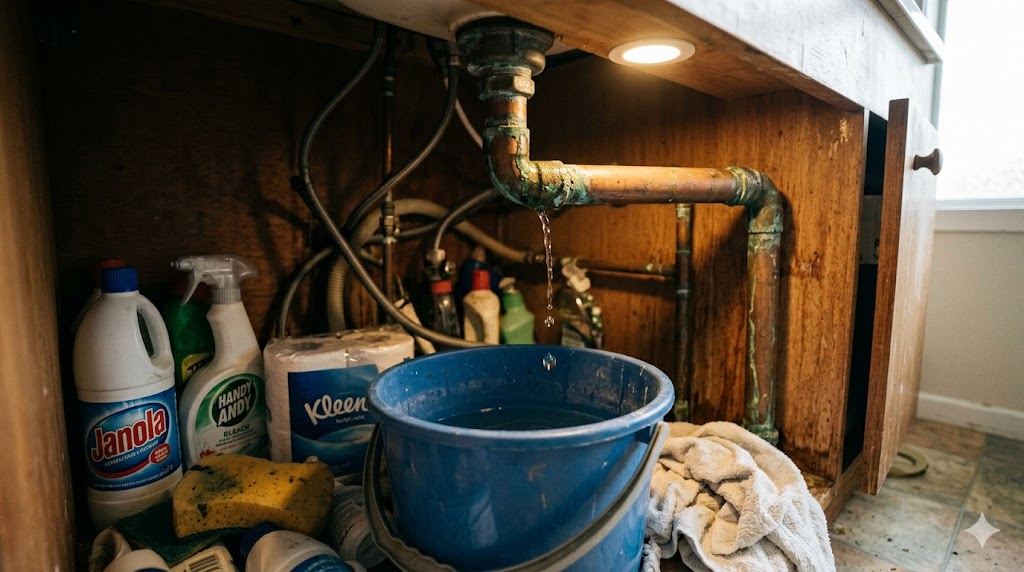
- Inspect flexi hoses: Look at the braided hoses connecting taps and toilets to supply pipes. Check for rust, bulging, or damage to the outer braiding. Replace any that are 10 or more years old — do not wait for them to burst.
- Check waste connections: Look for moisture or staining around the waste pipe connections under the sink. Even small drips add up and cause cabinet damage.
- Check the P-trap: The curved pipe under the sink should have no signs of leaking at the joints.
Drainage
- Run all drains and check the speed: Each shower, basin, and sink should drain quickly. Slow drainage means a partial blockage that will eventually become a full one. If you have a blocked drain, get it sorted before it worsens.
- Clear hair and debris from drain covers: Shower drain covers in particular accumulate hair and soap scum. Clean them regularly.
- Check outdoor drains: Make sure outdoor area drains and gully traps are clear of leaves and debris before winter rain arrives.
Water Pressure
- Check pressure feels consistent: If pressure seems lower than it used to be, or varies unexpectedly, investigate. Gradual pressure loss can indicate pipe corrosion, a partially closed toby valve, or a failing pressure reducing valve. In some cases, leak detection may be needed to find a hidden issue.
Gas System
- Annual servicing: Gas appliances (hot water, cooktops, fires, heaters) should be serviced annually by a licensed gasfitter. This is required to maintain warranties and ensures safety.
- Check for smell: Any hint of gas odour — a rotten egg smell — should be taken seriously. A gas leak is dangerous. Turn off the gas at the meter and call a gasfitter immediately.
- Check gas compliance certificates: Make sure you have current gas compliance certificates for all gas work. If you have had gas work done and cannot find the certificate, ask your gasfitter to issue a replacement.
Know Where Your Shutoffs Are
- Toby valve: Find it, check it turns freely, and make sure every adult in the household knows where it is
- Gas meter shutoff: Same principle — know where it is and how to turn it off
- Hot water cylinder isolator: Know which switch at the electrical board controls the cylinder
In an emergency, being able to act in the first 60 seconds can prevent thousands of dollars in damage. If something does go wrong, an emergency plumber can help fast.
Want a Professional Plumbing Check?
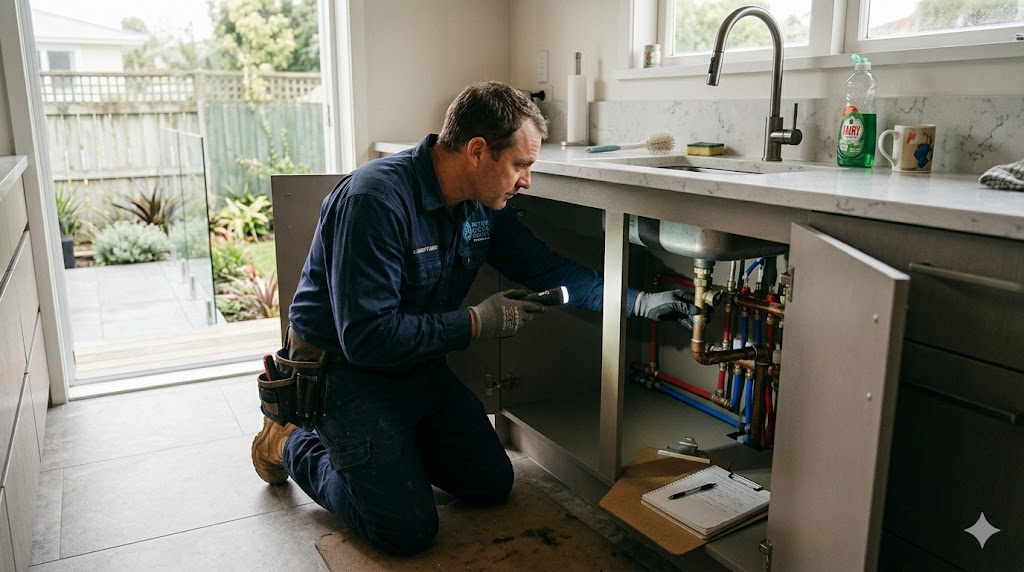
Water and Gas Worx offers annual plumbing maintenance checks across Auckland. We will work through your whole home, identify issues before they become emergencies, and give you a clear priority list for any repairs needed. As registered members of the Plumbers, Gasfitters and Drainlayers Board, you can trust our work meets NZ standards.
Call 0800 322 322 or email service@wgw.co.nz to book.
Frequently Asked Questions
How often should I get a plumbing maintenance check?
Once a year is ideal for most Auckland homes. Autumn is the best time so everything is in good shape before winter puts more demand on your hot water and heating. Older homes with galvanised pipes may benefit from six-monthly checks.
How much does a plumbing maintenance check cost?
Our rate is $155 plus GST for the first hour, then $100 plus GST per hour after that. After-hours and weekends are $295 plus GST for the first hour, then $100 plus GST per hour after that. Public holidays are $395 plus GST for the first hour. We can quote before starting so you know the cost upfront.
What is the most common issue found during a plumbing check?
Ageing flexi hoses and slow drains are the most common findings. Both are easy and inexpensive to fix during a maintenance visit but can cause serious damage if left until they fail.
Can I do a plumbing check myself or do I need a plumber?
You can do a visual check using this checklist — looking for drips, rust, and slow drains. But a licensed plumber can test water pressure, check gas systems, and identify hidden issues you would not spot yourself. A professional check once a year is good insurance.