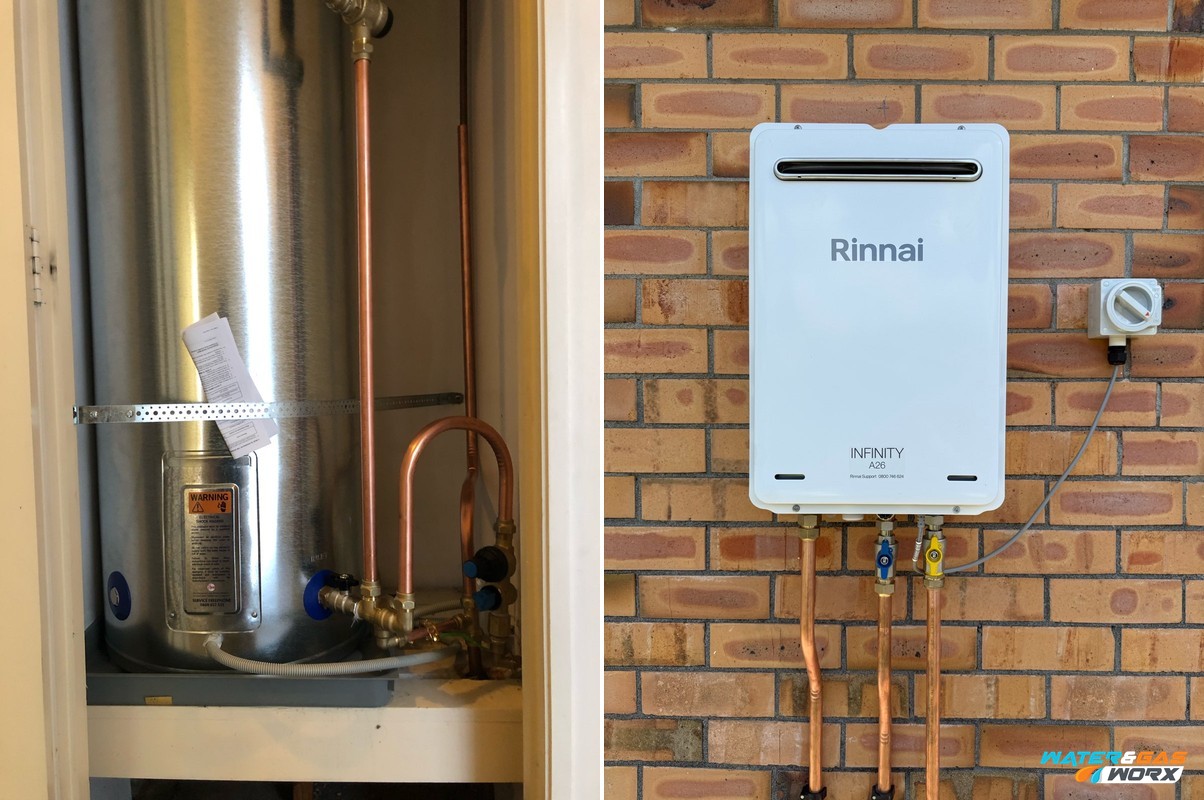
Upgrading your hot water system? The two most popular options in New Zealand are traditional storage cylinders and continuous flow (instant) systems. Both have their place — here's an honest comparison to help you choose.
How They Work
Storage Cylinder
Heats a tank of water (typically 135 to 300 litres) and keeps it hot until you need it. Powered by electricity, gas, or a heat pump.
Continuous Flow
Heats water on demand as it passes through a wall-mounted unit. No tank — fires up when you turn on a hot tap, shuts off when you stop. Most run on natural gas or LPG.
Pros and Cons
Storage Cylinder
Pros:
- Lower upfront cost
- Simple, proven technology
- Works with existing connections
- Available in a wide range of sizes
- Can pair with solar panels or heat pumps
Cons:
- Can run out of hot water
- Takes up cupboard space
- Standby heat loss — uses energy 24/7
- Limited lifespan (15 to 20 years)
Continuous Flow
Pros:
- Unlimited hot water — never runs out
- Compact wall-mounted unit saves space
- No standby energy loss
- Longer lifespan (20+ years)
- Lower running costs vs electric cylinders
Cons:
- Higher upfront cost
- Requires gas supply
- Flow rate limits simultaneous taps
- Needs electrician + plumber + gasfitter
Cost Comparison
Rough guide for Auckland installations (2025/2026 pricing):
| System | Installed Cost |
|---|---|
| Electric storage cylinder (like for like) | $2,000 - $3,500 |
| Gas continuous flow (e.g. Rinnai Infinity A26) | $3,300 - $5,500 |
| Heat pump hot water | $4,000 - $6,500 |
Running costs vary, but continuous flow gas systems typically cost less per year than electric cylinders, especially for larger households.
Which Is Right for You?
Choose a storage cylinder if:
- You want the lowest upfront cost
- You already have a cylinder cupboard and electrical connection
- Your household is small to medium (1 to 3 people)
- You want a straightforward like-for-like replacement
Choose continuous flow if:
- You're sick of running out of hot water
- You have a gas connection (or are willing to install one)
- You want lower long-term running costs
- You have a larger household or high hot water demand
- You want to free up cupboard space